
Tatting and crochet are both beautiful lace-making techniques, but anyone who’s tried both will know they couldn’t be more different. Here are 10 key differences that set them apart:
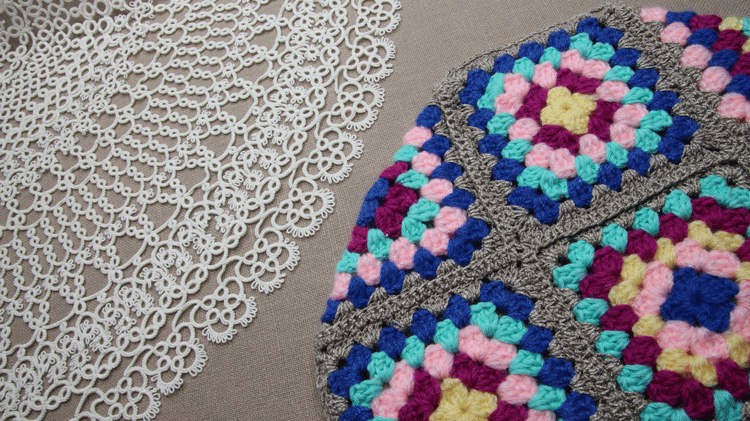
TATTING
CROCHET
1. Knotting vs. looping
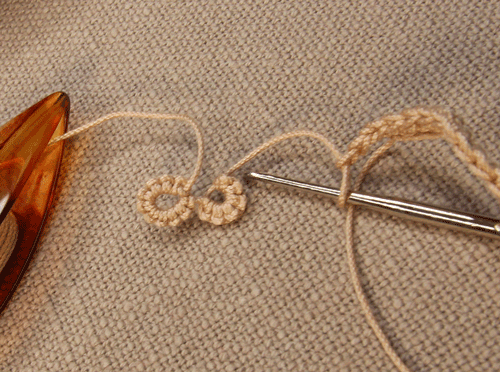
Tatting lace is created through hand-knotting, forming small, precise knots that link together to build rings and chains. Each knot is tied individually, making tatting a meticulous, detail-oriented craft. This knotting technique gives tatting its unique patterns, intricate shapes, and refined aesthetic.
In contrast, crochet relies on looping techniques, where loops of yarn or thread are interconnected to form a crocheted fabric. Looping allows faster progress and easier manipulation of material, giving each craft its own characteristic look and method of construction.
2. Shuttle vs. hook
Tatting lace is traditionally created using a tatting shuttle, which holds the thread and enables precise knotting. A fine crochet hook can assist in joining rings and chains, but it’s purely auxiliary — the knots themselves are made with the shuttle. A variation called crochet tatting uses a specialised hook to form tatting knots, but this requires a specific tool.
Meanwhile, crochet relies entirely on a crochet hook, a versatile tool used to form a wide variety of stitches and patterns. Depending on the thickness of the thread or yarn, it’s important to choose the right hook size to achieve even tension and well-defined designs.
3. High-quality vs. variety threads
Tatting requires high-quality threads, typically fine cotton, silk, or polyester. Thread strength, smoothness, and evenness are crucial — weak, fuzzy, elastic, or uneven threads make it hard to form neat, consistent knots and can prevent rings from closing altogether, making tatting completely impossible.
Crochet, on the other hand, works with almost any fibre — from delicate cottons and silks to chunky wools and synthetic blends. This flexibility allows crafters to adapt threads and yarns for texture, thickness, colour, or warmth, producing everything from fine lace to bulky blankets.
4. Challenging to learn vs. beginner-friendly
Tatting has a steep learning curve. Mastering shuttle control, tension, and the infamous “flip” requires patience. Mistakes are costly — once a knot is tied incorrectly, it cannot be undone, and failed elements must be discarded, requiring fresh thread for each attempt. But difficult doesn’t mean impossible: at Tatting Academy, we provide guidance and resources to help you master this beautiful craft.
Crochet is far more beginner-friendly. Basic stitches can be learned in a single session, and errors can be undone by unraveling the work and trying again, as many times as needed.
5. Single-use vs. reusable threads
In tatting, threads are essentially single-use — once knotted, the thread can’t be recovered or repurposed. A mistake or abandoned project usually means the material is lost.
Crochet, in contrast, is eco-friendly in this regard. Most crochet pieces can be unravelled and reused for a completely new project, giving crafters more creative freedom and reducing waste.
6. Slow vs. fast
Tatting is a slow, meticulous process because it’s built knot by knot. For example, creating a 10 cm chain using tatting knots will definitely take longer than making a 10 cm chain of the same thread in crochet. This careful repetition makes tatting a mindful, meditative craft.
Crochet, by contrast, allows faster progress. Making a similar-sized doily in crochet takes significantly less time — often several times less — than in tatting.
7. Rigidity vs. stretchability
Tatting lace is known for its rigid, non-stretch structure, holding its shape naturally. This makes it ideal for defined forms like tatted collars, jewellery, bookmarks, or delicate doilies.
Crochet fabric is naturally stretchy and flexible, adapting to shapes. This elasticity adds comfort to garments, but crochet decorations like doilies often require stiffening with starch, glue, or other methods to hold their form.
8. Rare vs. popular
Tatting lace originated in 18th-century Europe as a rare, aristocratic hobby. Its delicate designs, fine threads, and specialised tools made it less accessible, and it remains a niche craft, admired for its beauty by crafters and casual admirers alike.
Crochet, by contrast, became widely popular in the 19th century. Its accessibility and versatility helped it spread globally, with abundant patterns, tutorials, and communities supporting crafters of all levels.