

Here’s what’s inside this post:
What is tatting?
Early origins: knotting before tatting?
Tatting in the 19th Century: the shuttle era.
Cultural spread and variations.
Tools and materials through time.
The timeless charm of tatting.
What is tatting?
Tatting is a delicate form of lace-making that creates intricate designs from knots and loops. In this post, we explore the history of tatting. Its elegance has captured the attention of crafters for centuries, from aristocratic parlors in 18th-century Europe to modern home crafters around the world. While often associated with small shuttles or needles, tatting is more than just a technique; it is a cultural artefact that carries history in every loop.

Early origins in the history of tatting
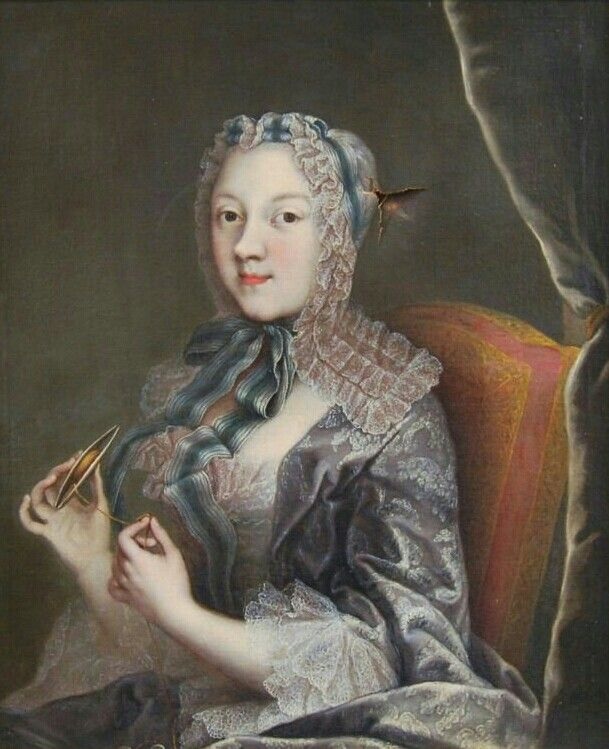
The roots of tatting trace back to decorative knotting techniques used in Europe during the 17th and 18th centuries. Early forms were referred to as “knotting lace” and often served as trims on clothing and household linens. Portraits like Madame Adélaïde de France faisant des nœuds by Jean-Marc Nattier (1756) depict aristocratic women engaged in decorative knotting, illustrating the craft’s presence in high society.
Tatting in the 19th Century: the shuttle era
By the 19th century, tatting as we know it – often made with a small shuttle – had become widely popular across Europe and beyond. Instruction manuals such as Thérèse de Dillmont’s Encyclopaedia of Needlework (1884) and The Ladies’ Work-Table Book (1843) helped standardise techniques and patterns, bringing the craft to parlours far beyond aristocratic circles. These guides demonstrate the evolution of stitches and the importance of picots, chains, and rings in creating complex lace motifs.
Cultural spread and variations
While European women initially popularised tatting, the technique eventually spread worldwide. Different countries developed unique styles, sometimes influenced by local textile traditions. In Japan, for example, intricate motifs in modern Japanese tatting show a beautiful blend of traditional Western techniques and Japanese aesthetic sensibilities. The craft has also seen a renaissance in the 20th and 21st centuries thanks to craft magazines, online tutorials, and social media communities, keeping the art alive for new generations.
Tools and materials through time
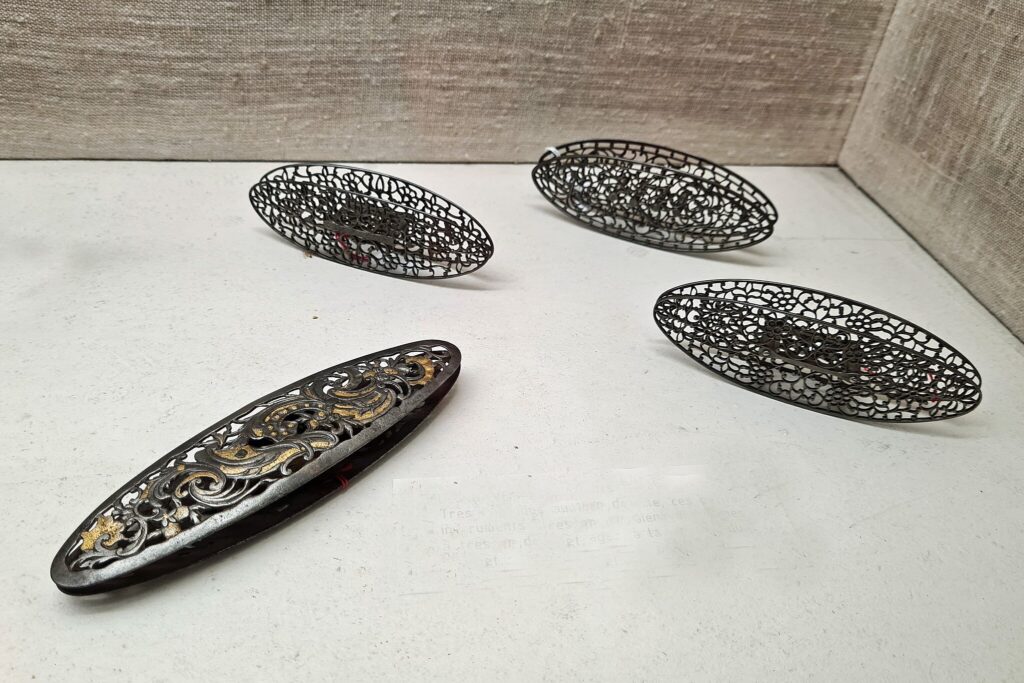
Early tatting was done using fine linen or silk threads, while shuttles were made of bone, wood, or metal. The introduction of cotton threads in the 19th century expanded the craft’s accessibility. Needle tatting emerged as an alternative method, allowing makers to create lace without a shuttle, thus giving rise to new styles and possibilities. Museums like the Smithsonian National Museum of American History preserve examples of these tools, documenting the evolution of tatting implements over time.
Whether you are a hobbyist or a serious lace-maker, exploring tatting is like holding centuries of cultural history in your hands – why not try a small project today?
The timeless charm of tatting
From aristocratic salons to contemporary craft rooms, tatting has demonstrated remarkable resilience and adaptability. It is both a practical skill and a form of artistic expression, connecting generations across time and geography. Whether you are a hobbyist or a serious lace-maker, exploring tatting is like holding centuries of cultural history in your hands.